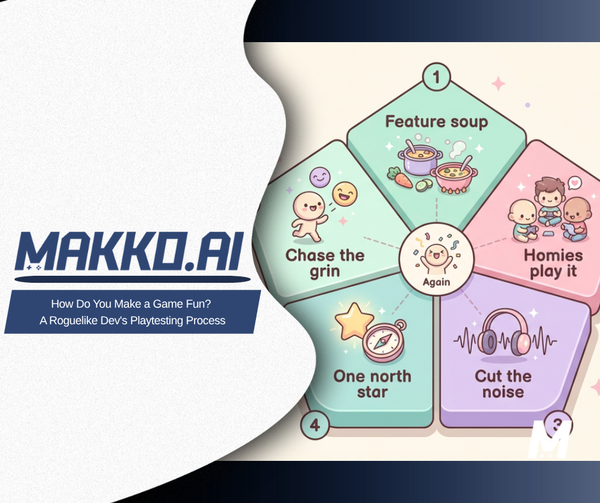
Indie Game Development How Do You Make a Game Fun? A Roguelike Dev's Playtesting Process Finding the fun is not a brainstorm. It is a loop. Tony Valcarcel on weekly playtests, raw notes, and the north star keeping Sector Scavengers honest.
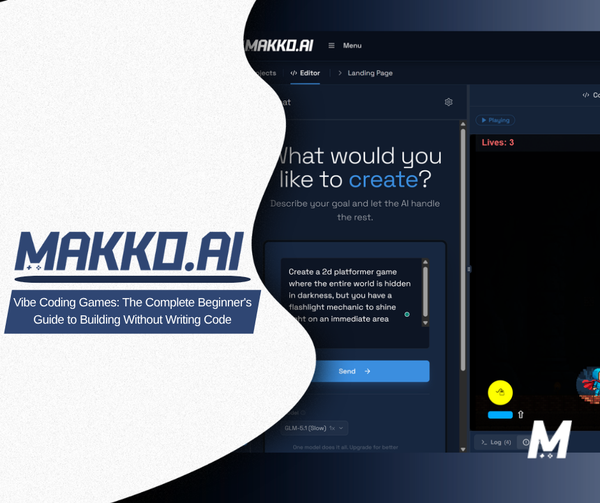
Vibe Coding Vibe Coding Games: The Complete Beginner's Guide to Building Without Writing Code Vibe coding games means describing what you want and letting AI build it — no syntax, no compiler errors, no prerequisites. This is the complete beginner's guide to making a 2D game without writing a single line of code.
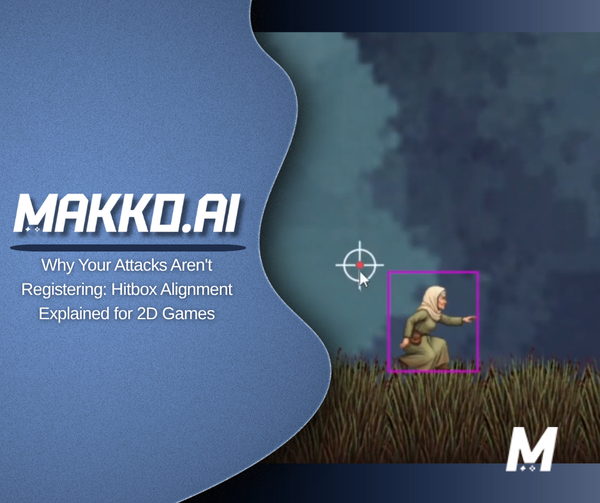
AI Game Development Why Your Attacks Aren't Registering: Hitbox Alignment Explained for 2D Games Your attacks miss. Your character gets blocked by nothing. Your collision feels completely wrong. None of that is an art problem. It is a hitbox problem — and this is how you fix it.
sprite animation Sprite Animation Alignment: Anchor Points, Scale, and using Characters in multiple games A complete walkthrough of Makko's Alignment Editor, covering how to scale characters to fit their game world, set anchor points correctly, and understand the critical difference between manifest-specific and global edits in a multi-game asset pipeline.
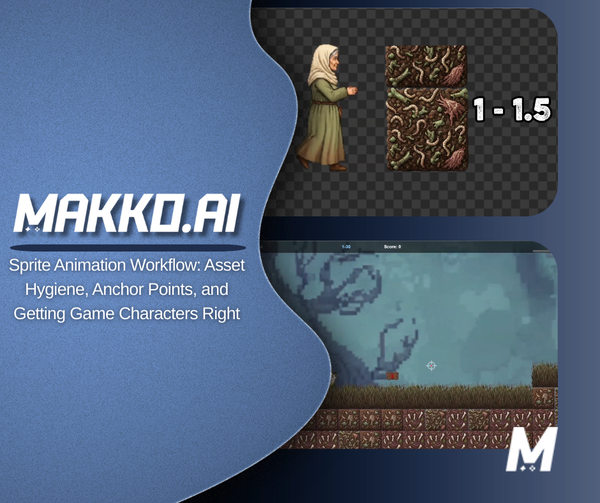
sprite animation Sprite Animation Workflow: Asset Hygiene, Anchor Points, and Getting Game Characters Right A complete weekly breakdown of Makko's sprite animation workflow, covering anchor points, asset pipelines, jump animation, the action layer, and why your character's emotional pacing starts with frame count.
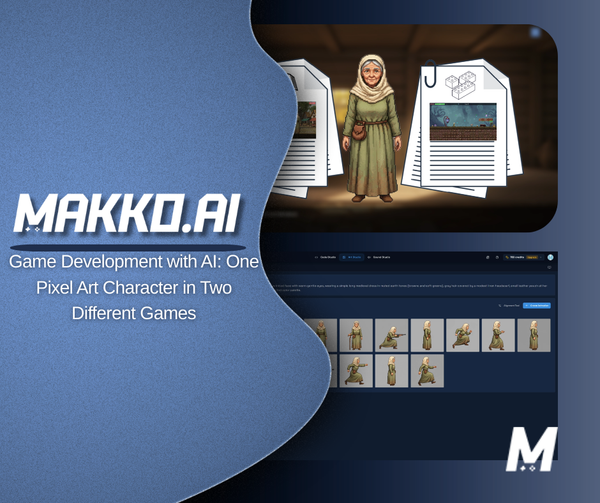
Sprite Alignment Game Development with AI: One Pixel Art Character in Two Different Games Shows how frame normalization and alignment turn generated sprites into consistent, reusable assets for gameplay systems.