AI Game Development Devlog: How I Built 100 Game Cards in 7 Days Using Makko
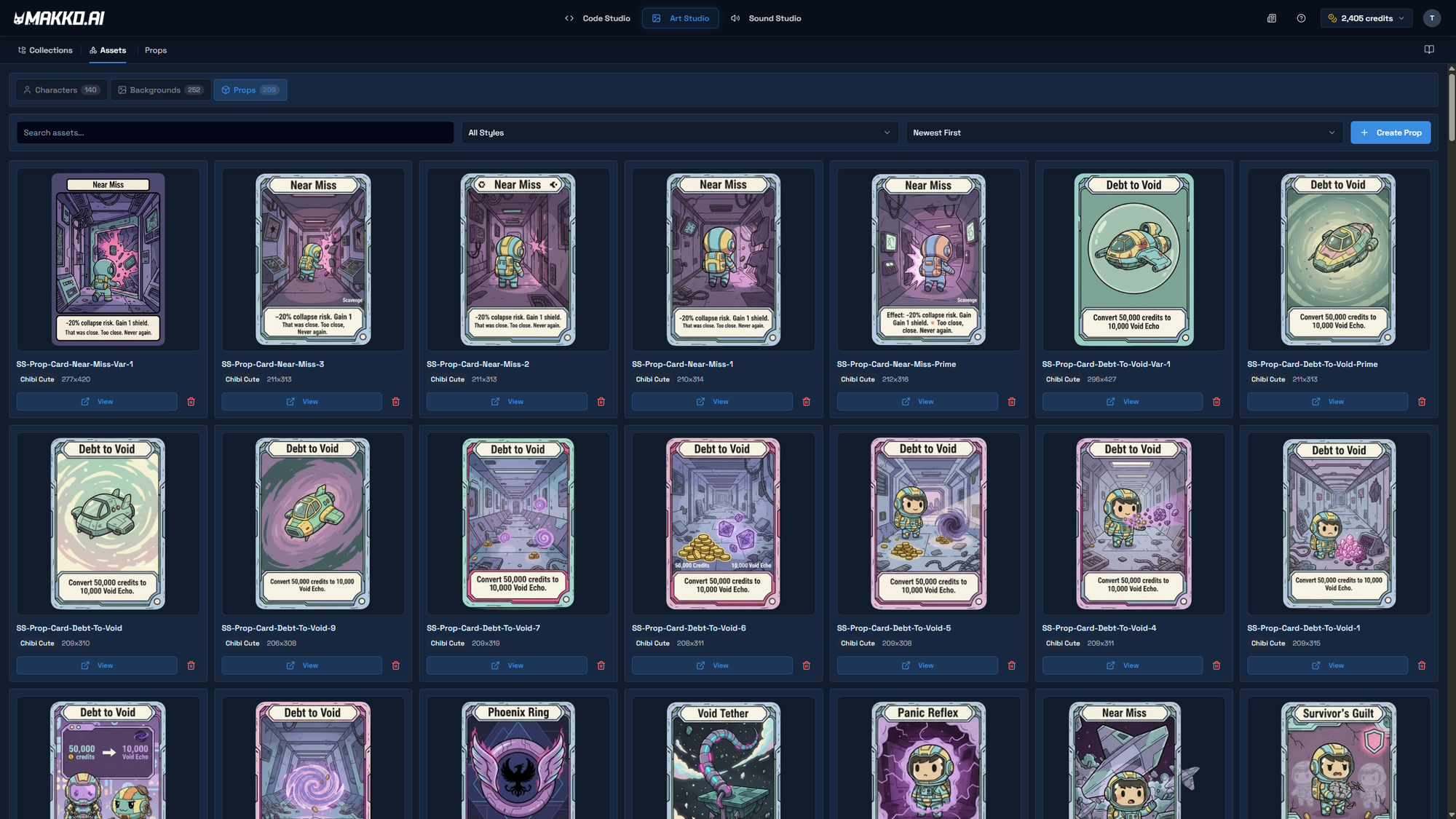
Over 100 unique card assets. 7 days. Under $500. No dedicated artist on the team.
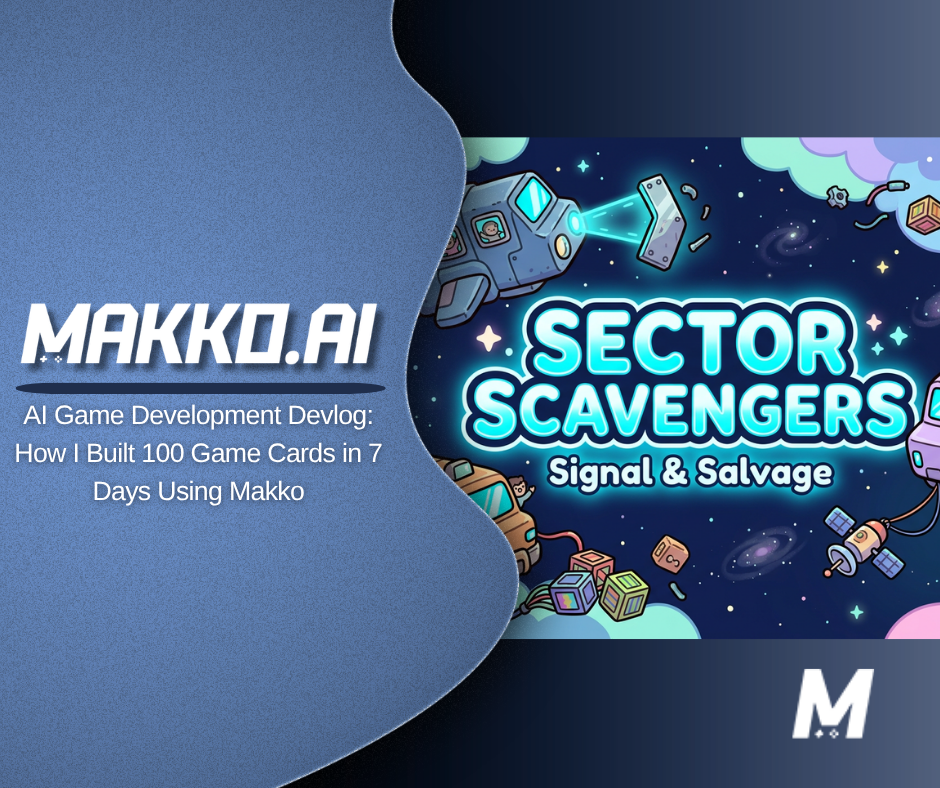
That is what AI game development made possible for Sector Scavengers, a roguelike salvage game I have been building using Makko. This post is a full walkthrough of the card art we created, what each card does mechanically, and how the design turns derelict salvage into a replayable roguelike experience.
It is also an honest account of what the process actually looks like: the design questions we have not answered yet, the mechanics we are not sure about, and how Makko makes it possible to test a much wider range of hypotheses with real players than traditional production methods would allow.
The game: Sector Scavengers
Sector Scavengers is set in a bleak future where tech employees wake from cryo freeze as space salvagers. Each salvage run is a tight 10-round tactical session. You draft three tactic cards per round, spend energy to play them, and manage risk against reward while your hull creaks and your shields drain.
The card art brings each decision to life. Every Scavenge, Repair, Extract, and danger card has its own illustrated identity, and the mechanics behind them turn simple choices into genuine tension. The loop is simple to learn and hard to stop playing.
What Makko built in 7 days
In the past week, Makko and I created over 100 unique card assets for our playtesters. These split into two types: unique cards with different gameplay impact, and art variants for those unique cards. Both are unlockable through gameplay.
The speed matters here. Not just for the obvious reason that faster is cheaper, but because speed changes what you can test. When generating a new card variant takes minutes rather than days, you can put more mechanical hypotheses in front of real players and let the data answer questions that would otherwise stay theoretical. Makko makes that kind of iteration possible at a scale that would have been financially out of reach for a solo creator two years ago.
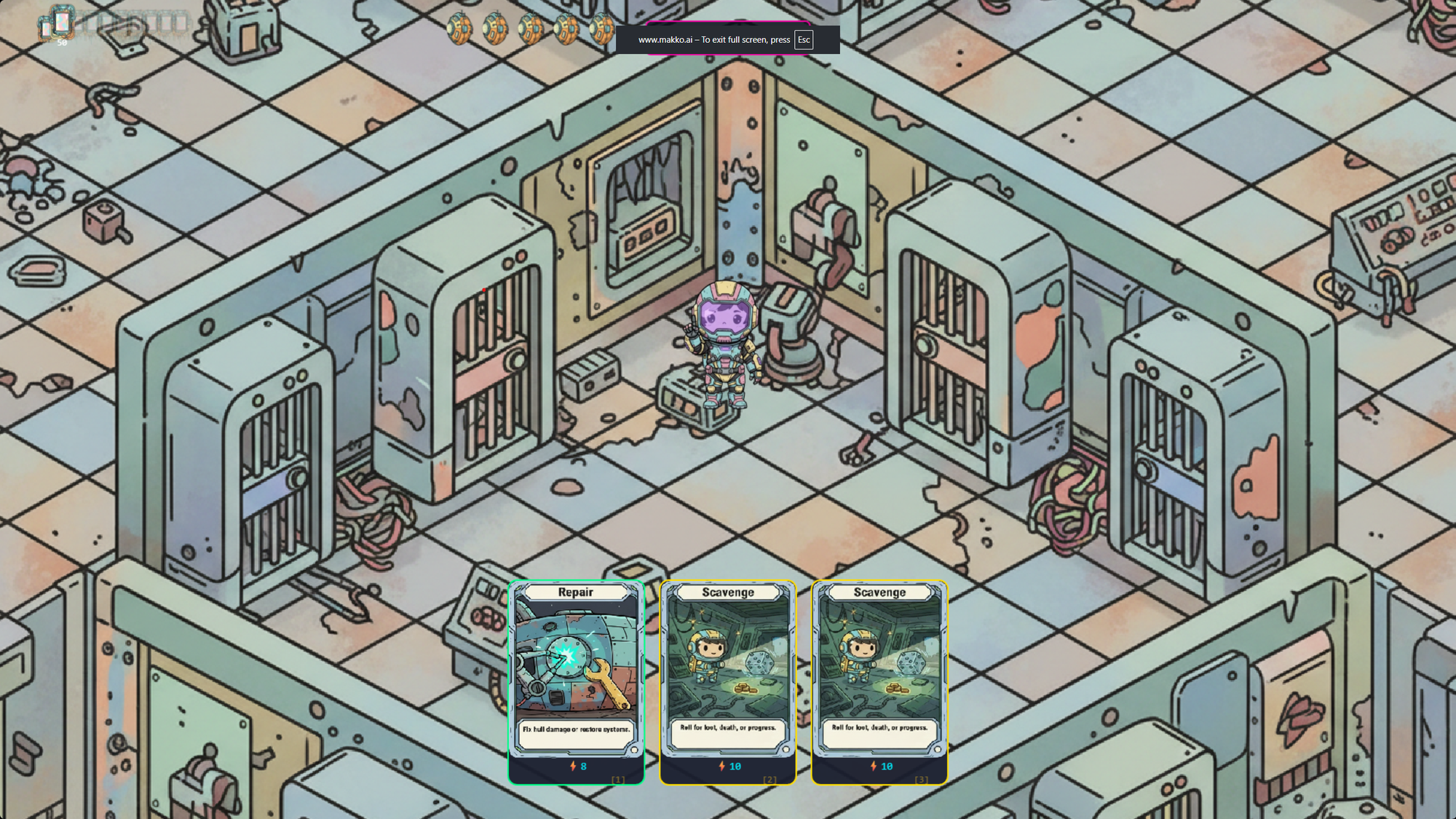
Core cards: the foundation of every run
Every run starts with three core cards. These are the bread and butter of the game: Scavenge for loot, Repair to keep the ship alive, Extract to exit with your gains.
Scavenge: risk hull breach for rewards
Scavenge is the base risk and reward card. There is a 30% chance of valuable salvage with ship class boosting rarity, 20% chance of nothing, and a 50% chance of entering a danger zone where breach chance scales by round. Higher ship class means better loot and higher breach chance. The card and the environment define the loop together: push your luck or play it safe.
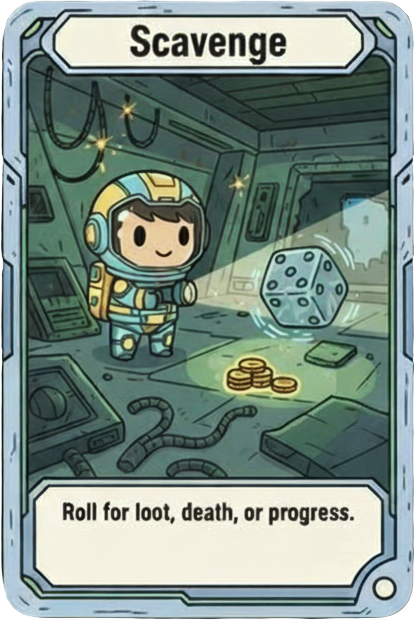
The variants that sit behind Scavenge are where the real design questions live. Do players enjoy risking everything for a chance at Legendary loot? Or do they prefer facing death in exchange for double the volume of rewards? Makko makes new art trivial to generate, so testing both is not a production problem. It is a playtesting question, and only real players can answer it.
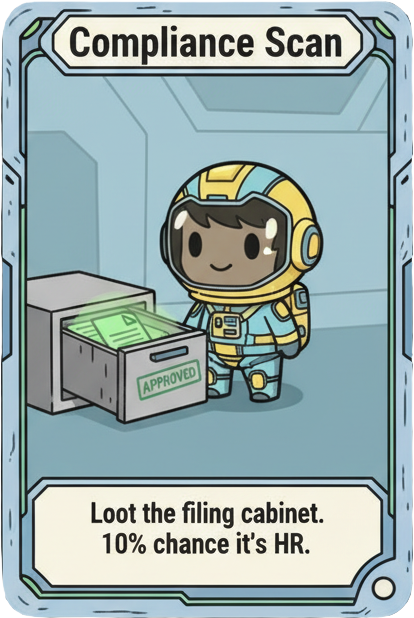
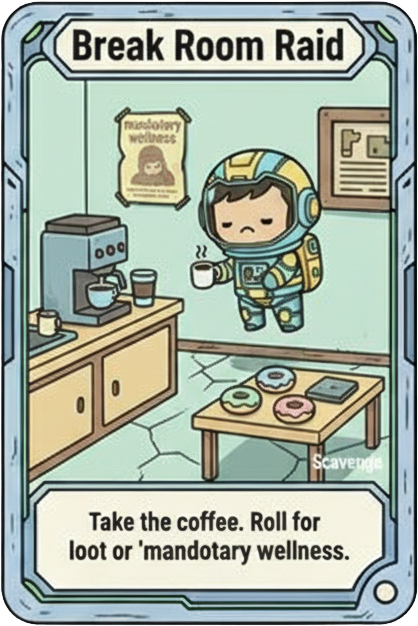
Compliance Scan and Break Room Raid: art variants
These two cards have no gameplay impact. They are Scavenge cards with different art and descriptions, unlockable and toggleable by the player. The design question they are testing is simple: do players care about art variants at all? Is cosmetic variety worth building? Makko makes the production cost of the answer nearly zero.
Gameplay variants: Risky Scavenge, Rush Scavenge, Full Haul, Deep Scan
These unlockable cards let players choose different strategies and earn progression experience points toward more cards in their category.
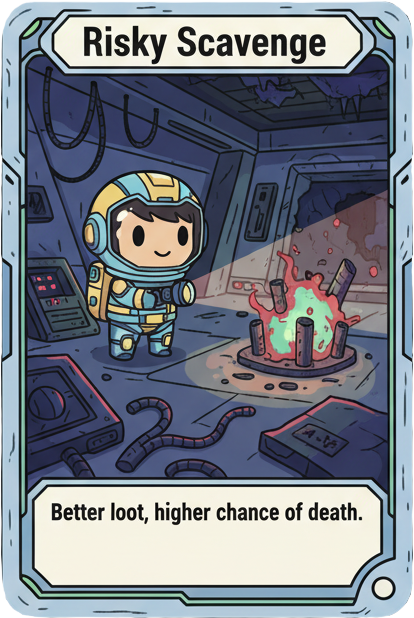
Risky Scavenge increases the risk of hull breach in exchange for greater rewards. It lets players who want to lean into the danger do so deliberately.
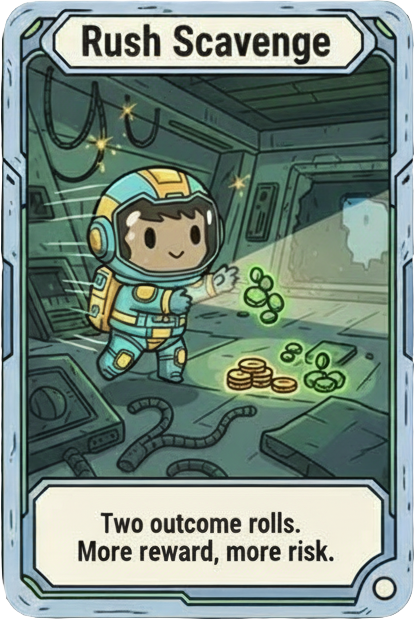
Rush Scavenge increases hull breach risk for double rewards. The design question: do players prefer more rewards or better rewards? Both variants exist so playtesting can answer that directly.
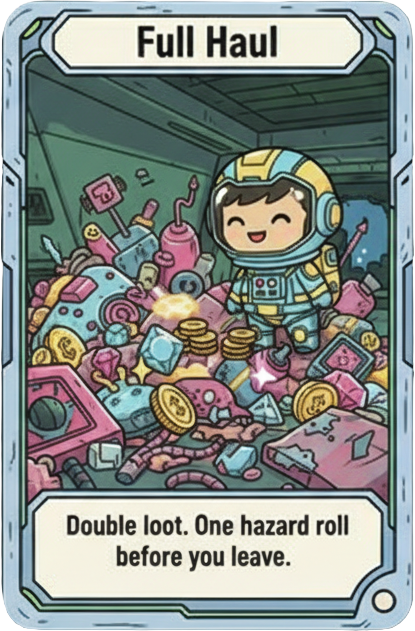
Full Haul doubles your loot but triggers a hazard roll regardless of how you extract. It is the most mechanically complex of the Scavenge variants and raises an honest design question: is asking the player to remember they applied a debuff to their extract too much cognitive overhead? Playtesting will tell us.
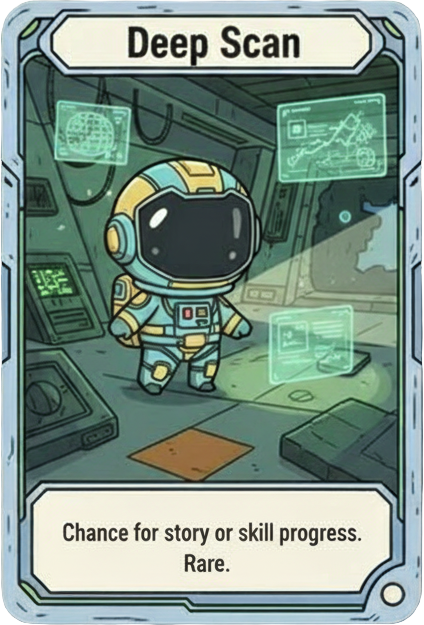
Deep Scan reveals a hidden bonus item with no breach risk and a lower energy cost of 10. It is the safer path to loot and feels like it might be overpowered. Making it rare is probably necessary to keep it meaningful. That is another hypothesis playtesting will resolve.
Repair: restore hull, survive the run
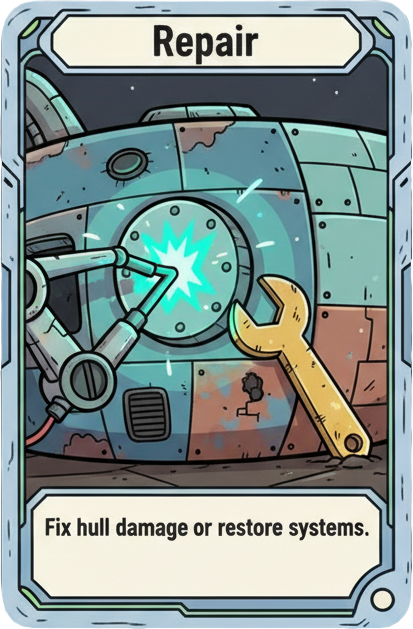
Repair restores 10 or more hull and reduces collapse risk by 10% per use. Three repair cards in a run allow the derelict to persist and become a candidate for upgrade and future habitation. There is a 35% chance of hull stress that deals 25 damage, so even the sustain card can bite back. It is essential for long runs.
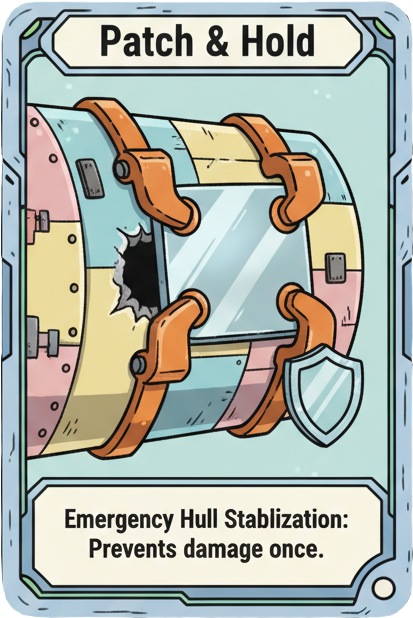
Patch and Hold activates a shield and applies one charge of repair. A defensive variant for players who want to build a protective layer before pushing further into the derelict.
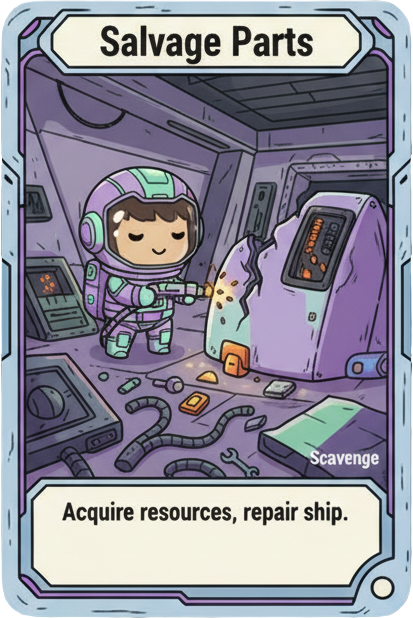
Salvage Parts kicks off a Scavenge loot and damage roll and applies one charge of repair, giving players the ability to search for salvage and repair the ship in a single card play. The design question: how do players use and enjoy dual-use cards? Are they overpowered? Will scarcity need to be applied during the draw? Playtesting will answer that.
Extract: exit the run with your loot
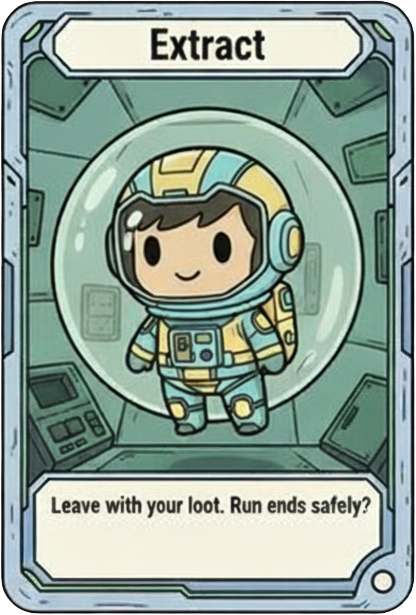
Extract is the tension card. It costs only 5 energy but the later you play it in the run the more likely a breach becomes on your way out. The question it forces every round: extract now and bank your rewards, or scavenge one more time?
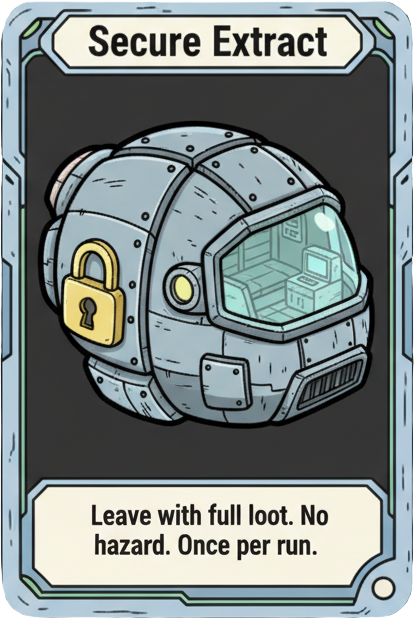
Secure Extract guarantees a safe exit but costs 15 energy and almost always appears before round 5, which means using it costs you rounds. The tension shifts from breach risk to opportunity cost.
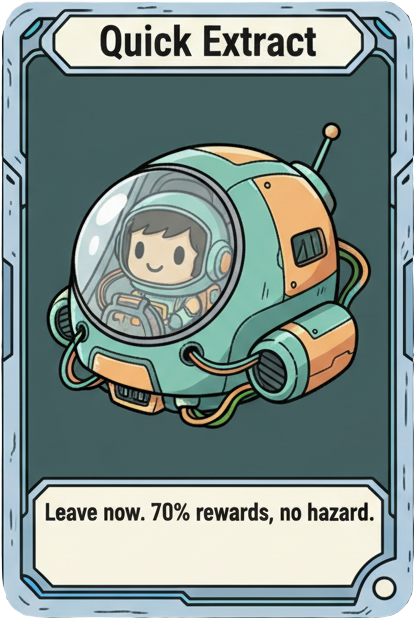
Quick Extract guarantees you get out alive but you leave 30% of your loot behind. A card for players who would rather survive with less than risk losing everything.
Unlockable cards: Death Tier and Doctrine progression
Cards unlock as you play. Collapse fills the Death Tier meter. Reach thresholds and new cards enter the draft pool. Make specific card choices to advance your Doctrine path, Corporate, Cooperative, or Smuggler, and unlock more cards at 5, 10, and 15 points.
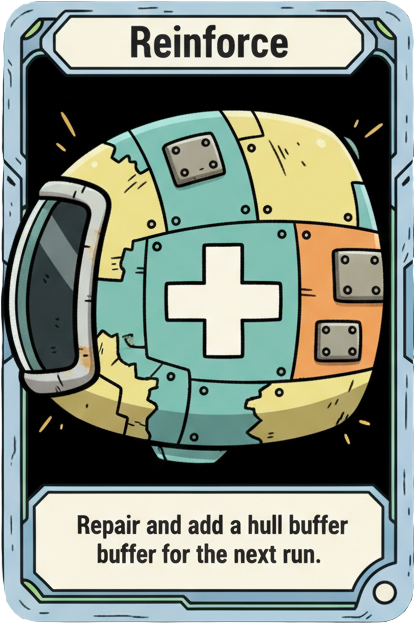
Reinforce adds one shield up to a maximum of five. Each shield blocks one hull breach. It unlocks at Death Tier 1 and gives players their first real defensive tool.
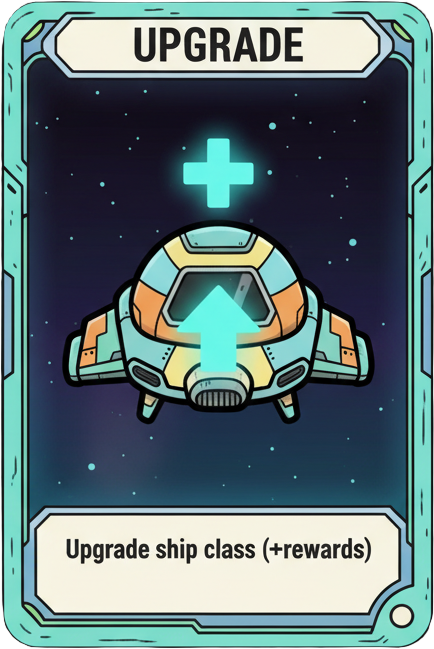
Upgrade costs 20 energy and bumps the target ship's class by 1. Higher class means better loot and reduced breach chance. It is a long-term payoff card that rewards players who think several rounds ahead.
Watch some of these cards in action
How this creates a compelling roguelike experience
The design is built on a few interlocking principles that give Sector Scavengers its tension.
Every Scavenge and Rush Scavenge is a weighted roll. Ship class and round number change the odds. You are always deciding whether to push one more round or extract now. That decision never gets easier because the stakes keep rising.
Danger cards add unpredictability. Hull Creaking, Power Surge, and Structural Stress are forced plays that create memorable moments and force backup plans. Shields and repair cards take on new meaning once you have been caught by a Power Surge at round 8 with no shields left.
Progression through failure keeps the loop running. Collapse fills the Death Tier meter. New cards unlock over time. Fail runs still advance you, so every collapse moves you toward new tools. The intent-driven game development approach Makko uses made it possible to wire this progression system together without writing a single line of code.
Energy management adds a second layer of decision-making beneath the card choices themselves. Run out mid-run and your options narrow significantly. The Energy Siphon mechanic exists to create a safety valve, but tapping it has its own cost.
Card art reinforces identity at a glance. Scavenge versus Risky Scavenge, Repair versus Patch and Hold, danger cards in their smaller prop style. The visuals support fast recognition and help players build a mental map of their deck quickly.
What Makko made possible here
The honest answer is that this game would not exist at this stage without Makko. Not because the ideas were not there, but because the production gap between having ideas and being able to test them with real players would have been too wide to cross at this pace and this cost.
Over 100 cards in 7 days at under $500 is not a brag. It is a description of what changes when the bottleneck shifts from production to design judgment. Every card in this set exists because a design question needed to be answered. Makko made the cost of asking those questions low enough that we could ask all of them at once.
Next week I will walk through the Void Echo and death-themed progression system, which I am calling Void Communion. In Sector Scavengers, near-death experiences translate into unlockable power. That system is where the game's identity really starts to take shape.
For detailed walkthroughs and live feature demos, visit the Makko YouTube channel.