How Do You Make a Game Fun? A Roguelike Dev's Playtesting Process
Finding the fun is not a brainstorm. It is a loop. Tony Valcarcel on weekly playtests, raw notes, and the north star keeping Sector Scavengers honest.
How do you make a game fun? For me, it is not a single brainstorm or a lucky design doc. Finding the fun is a function of continuous interaction and feedback.
Every week, I ask a different group of friends to play Sector Scavengers: Signal and Salvage and I integrate what they say. Not as vague vibes, but as concrete changes to the core loop. This post is that process in one place: the ritual, the mess of real notes, how I turn noise into a plan, and the north star that keeps the next few months honest.
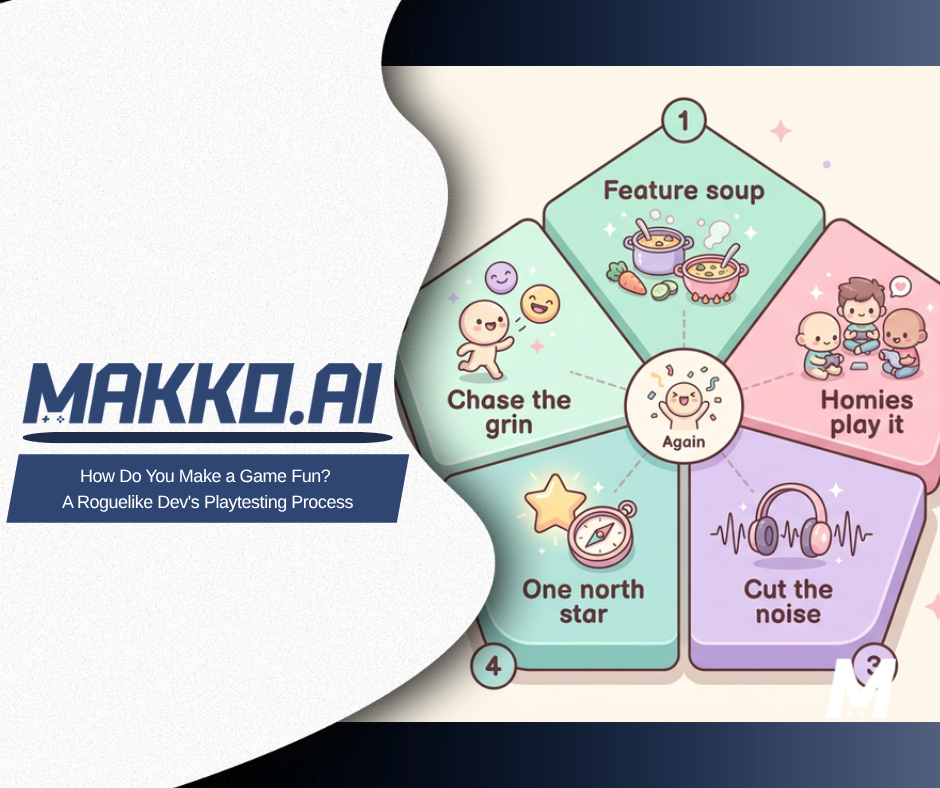
The loop in five beats
I think of the game loop discovery cycle as five steps that repeat:
Feature soup. Ideas pile up. Everything feels important. The game is full of things.
Homies play it. Real people play a real build. They do not care about your intent. They care what they feel in the first minute.
Cut the noise. Feedback is raw. You separate signal from suggestion: what is broken versus what is preference.
One north star. Pick the single outcome you are optimizing for right now. Usually: "is the core run compelling?"
Chase the grin. Ship changes, run the loop again. The goal is not perfection. It is observable fun improvement from session to session.
The center of that cycle is one word: again. You do not exit the loop until the grin shows up more often than confusion.
The Monday ritual
For the past five years, almost every Monday, a group of friends from the games industry and I get together to play games and catch up. It is not a formal user research block. It is community. But it is also one of the most honest feedback machines I have.
This week we ran a live play session on Sector Scavengers: Signal and Salvage. I walked away with 34 pieces of highly targeted feedback plus a pile of anecdotes that do not fit neatly in a spreadsheet but still change what I build.
If you want to see what raw notes actually look like, messy, specific, sometimes contradictory, here is the doc. Fair warning: it will look like nonsense without context. That is the point. Fun is discovered in the noise first, then refined in the roadmap.
As a highlight, one of my friends called the command deck screen a "User Experience War Crime." That is the kind of feedback you cannot get from metrics alone.
From notes to a plan
I fed the session summary to my design assistant AI agent with a blunt prompt:
I just got this feedback from two of the best video games professionals in the industry. Let's make a plan to fix this.
The agent came back with suggestions. I pushed back, merged, and cut until it matched what I actually believe about the game. Out of that collaboration came a six-phase roadmap focused on finding the fun in the core game loop first. We are not expanding meta systems until vanilla ship runs feel compelling.
North star
Make the vanilla ship run compelling before expanding meta systems.
Rule of thumb: if a first-time player cannot explain their strategy in 30 seconds, do not add new complexity.
That one line is the filter for feature soup, UI clutter, and "just one more system." Every decision in the next stretch of indie game development runs through it.
Core problems we are fixing first
These are the themes that showed up in playtests and in the plan. Not exhaustive, but they define the next stretch of work:
First 30 seconds: unclear and not exciting enough.
Choices: do not feel meaningful yet.
UI: cluttered; clickable priority is unclear.
Debt and billing language: feels punitive and confusing.
Extract: too easy, which weakens strategic tension.
Recaps and status panels: noisy and hard to parse.
Bottom line: the first ten minutes of Sector Scavengers: Signal and Salvage are going to change a lot. That work will ripple outward and will probably simplify or replace chunks of meta that only made sense when the core gameplay loop was fuzzy.
For other builders
Friends shipping games on nights and weekends: what is your process for finding the fun? Weekly playtests? One trusted nemesis? Metrics? I am always stealing good habits.
If this loop helps you, take the five beats and run your next session against them:
soup → play → cut → north star → grin → again
Game: Sector Scavengers: Signal and Salvage
Dev: @playmygamesnow
Original thread: X / Twitter
Frequently Asked Questions
How do you make a game fun?
Finding the fun is not a single design decision. It is a repeating loop. Build something playable, put real people in front of it, separate signal from noise in their feedback, pick one north star outcome to optimize for, ship changes, and run the loop again. The goal is observable improvement in how often players want to play again, not a finished design document.
How do you know when your game's core loop is working?
When a first-time player can explain their strategy in 30 seconds without prompting. If they cannot articulate what they are doing and why, the loop is not clear enough yet. That is the test to run before adding any new system, mechanic, or content layer on top.
What is the biggest mistake indie game developers make during playtesting?
Treating all feedback as equal. Raw playtest notes are a mix of signal and preference: what is genuinely broken versus what is personal taste. The job is to separate the two. A friend calling your UI a "User Experience War Crime" is signal. A friend saying they would prefer a different color scheme is preference. Act on signal first, every time.
How does AI help with indie game development and iteration?
AI works best as a design collaborator, not a replacement for playtesting. Feed it your session notes and a blunt prompt, push back on what it suggests, and use the output as a starting point for your own roadmap. The human judgment, knowing what you actually believe about your game, is what makes the collaboration useful. AI compresses the time between raw feedback and a structured plan.
For detailed walkthroughs and live feature demos, visit the Makko YouTube channel.